

The Ultimate Crash Course for Calculus
Overview
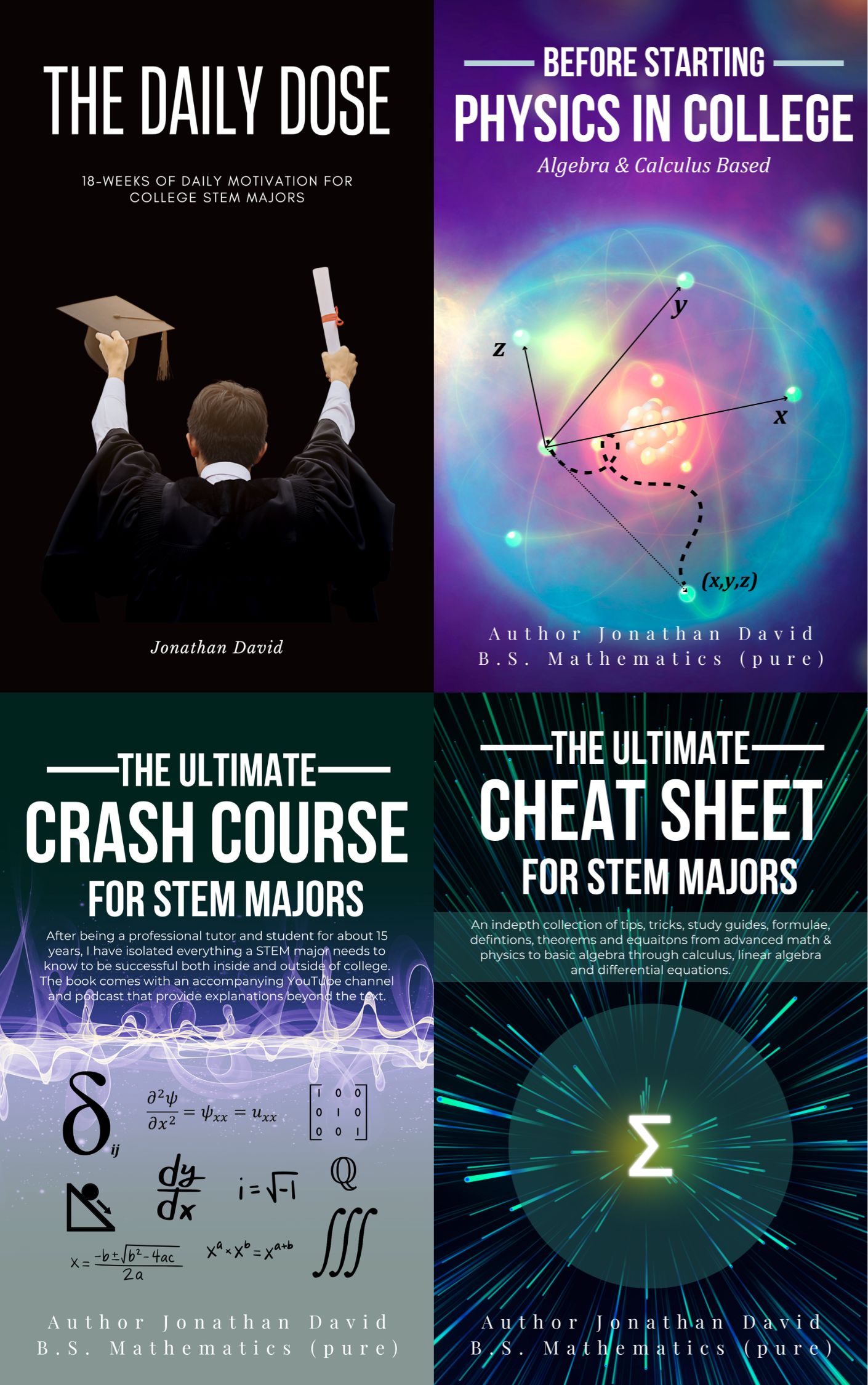
This lesson introduces the calculus portion of the Ultimate Crash Course series and explains how the material is organized for students moving into college calculus and beyond. The book is presented as a structured gateway into the language, notations, and solution writing style students are expected to understand as they progress through calculus, physics, and higher mathematics. :contentReference[oaicite:0]{index=0}
What the Book Is Doing
The book takes core material from the Stewart calculus text and reorganizes the most important problems into a guided sequence meant to show students what they are supposed to know and how the material is supposed to flow through a standard curriculum. It is not framed as a random solution bank, but as an ordered explanation of how to understand the subject properly. :contentReference[oaicite:1]{index=1}
Why the Notation Changes
A major emphasis in the video is that notation changes from book to book, and students need to learn how to stay mentally flexible while still respecting the structure of the text they are working in. Different symbols can mean the same thing when used consistently inside a given framework, and part of learning mathematics at this level is learning to read those differences correctly. :contentReference[oaicite:2]{index=2}
What Students Should Be Learning
- How differential and integral calculus fit into the broader college sequence.
- How to recognize and interpret multiple notations for the same underlying idea.
- How symbols, structure, and formatting affect mathematical meaning.
- How to read questions in a way that prepares for later work in physics and higher math.
More Than Just Solutions
The central message is that the book is meant to teach students how to think through questions in order, not how to copy answers. It is written to explain how a textbook wants to be read and how a student should process definitions, theorems, notation, and algorithms while learning the subject. :contentReference[oaicite:3]{index=3}
The Sherlock Holmes Method
One of the ideas emphasized in the lesson is building algorithms by process of elimination. Instead of memorizing a single path blindly, students are encouraged to recognize why certain approaches will not work so that the correct method stands out more clearly. The goal is structured mathematical judgment rather than shallow memorization. :contentReference[oaicite:4]{index=4}
Attention to Print and Presentation
Students are urged to pay attention to every symbol and formatting choice: commas, periods, bars, hats, vectors, italics, brackets, and notation changes from professor to professor or book to book. The lesson frames modern mathematical reading as an interaction with printed structure, where presentation itself carries important information. :contentReference[oaicite:5]{index=5}
Why Typing Matters
The video also stresses typed mathematical writing as a serious part of professional development. Microsoft Word is presented as the main working tool for drafting and organizing mathematics, while additional formatting systems can still be useful for resume building and translation across platforms. The broader point is that students should learn multiple tools while understanding when and why each one is being used. :contentReference[oaicite:6]{index=6}
Who This Is For
This calculus crash course is aimed at students who want a more structured bridge into college level work. It is described as part of a larger path that connects the crash course books, cheat sheets, study systems, and a broader lesson library meant to help students move into later coursework with better habits and stronger mathematical reading skills. :contentReference[oaicite:7]{index=7}
Quick Recap
- The book organizes essential calculus ideas in the order students commonly encounter them.
- It uses notation deliberately to train students to read mathematical language carefully.
- It is meant to explain how to understand a textbook, not just how to copy solutions.
- It encourages process of elimination and structured reasoning.
- It emphasizes typed mathematical communication and professional presentation.
- It serves as a bridge into later coursework in calculus, physics, and higher mathematics.
Share this:
- Share on Facebook (Opens in new window) Facebook
- Print (Opens in new window) Print
- Share on Threads (Opens in new window) Threads
- Share on Tumblr (Opens in new window) Tumblr
- Share on Telegram (Opens in new window) Telegram
- Share on Bluesky (Opens in new window) Bluesky
- Share on LinkedIn (Opens in new window) LinkedIn
- Share on Nextdoor (Opens in new window) Nextdoor
- Share on WhatsApp (Opens in new window) WhatsApp
- Share on Pinterest (Opens in new window) Pinterest
- Share on Mastodon (Opens in new window) Mastodon
- Email a link to a friend (Opens in new window) Email
- Share on Reddit (Opens in new window) Reddit
- Share on X (Opens in new window) X