STEM Major’s Guide

26 posts

LaTeX and MathPrint Code | The STEM Major’s Guide


Understanding The STEM Major’s Guide to the University

In this lesson, Jonathan David explains how the
STEM Major’s Guide to the University is organized inside P.L.E.M. Academy and how the
research position, certificate system, textbook development, and lesson library all work together.

The lesson explains that active problems first appear inside the research position where students can participate by reviewing lessons and leaving comments for publication credit in future books.
After the lessons are edited and refined, they are categorized into the appropriate textbook sections throughout the website.

Students are shown how the accordion system works, how lesson previews appear for non members, and how membership restricted material becomes available after logging in.

Jonathan also explains that the project is being built gradually over time and that the long term goal is to create a massive organized library of advanced STEM examples, textbook walkthroughs, and professional academic demonstrations for college students.

The lesson emphasizes that the goal is not simply to solve homework problems, but rather to teach students how to think and work professionally using real textbook style examples from mathematics, physics, engineering, and related STEM subjects.


“I'm not here to do your homework for you. I'm trying to show you guys how to be professional and how to use your textbook correctly by doing real examples that you guys see in college.”

— Jonathan David

Membership Required

You must be a member to access this content.

View Membership Levels

Already a member? Log in here

Before Starting Math in College | The STEM Major’s Guide


Understanding The STEM Major’s Guide to the University

In this lesson, Jonathan David explains how the
STEM Major’s Guide to the University is organized inside P.L.E.M. Academy and how the
research position, certificate system, textbook development, and lesson library all work together.

The lesson explains that active problems first appear inside the research position where students can participate by reviewing lessons and leaving comments for publication credit in future books.
After the lessons are edited and refined, they are categorized into the appropriate textbook sections throughout the website.

Students are shown how the accordion system works, how lesson previews appear for non members, and how membership restricted material becomes available after logging in.

Jonathan also explains that the project is being built gradually over time and that the long term goal is to create a massive organized library of advanced STEM examples, textbook walkthroughs, and professional academic demonstrations for college students.

The lesson emphasizes that the goal is not simply to solve homework problems, but rather to teach students how to think and work professionally using real textbook style examples from mathematics, physics, engineering, and related STEM subjects.


“I'm not here to do your homework for you. I'm trying to show you guys how to be professional and how to use your textbook correctly by doing real examples that you guys see in college.”

— Jonathan David

Membership Required

You must be a member to access this content.

View Membership Levels

Already a member? Log in here

Before Starting a STEM Degree | The STEM Major’s Guide to the University


Understanding The STEM Major’s Guide to the University

In this lesson, Jonathan David explains how the
STEM Major’s Guide to the University is organized inside P.L.E.M. Academy and how the
research position, certificate system, textbook development, and lesson library all work together.

The lesson explains that active problems first appear inside the research position where students can participate by reviewing lessons and leaving comments for publication credit in future books.
After the lessons are edited and refined, they are categorized into the appropriate textbook sections throughout the website.

Students are shown how the accordion system works, how lesson previews appear for non members, and how membership restricted material becomes available after logging in.

Jonathan also explains that the project is being built gradually over time and that the long term goal is to create a massive organized library of advanced STEM examples, textbook walkthroughs, and professional academic demonstrations for college students.

The lesson emphasizes that the goal is not simply to solve homework problems, but rather to teach students how to think and work professionally using real textbook style examples from mathematics, physics, engineering, and related STEM subjects.


“I'm not here to do your homework for you. I'm trying to show you guys how to be professional and how to use your textbook correctly by doing real examples that you guys see in college.”

— Jonathan David

Membership Required

You must be a member to access this content.

View Membership Levels

Already a member? Log in here

MacBook Grapher Lessons | The STEM Major’s Guide to the University


Understanding The STEM Major’s Guide to the University

In this lesson, Jonathan David explains how the
STEM Major’s Guide to the University is organized inside P.L.E.M. Academy and how the
research position, certificate system, textbook development, and lesson library all work together.

The lesson explains that active problems first appear inside the research position where students can participate by reviewing lessons and leaving comments for publication credit in future books.
After the lessons are edited and refined, they are categorized into the appropriate textbook sections throughout the website.

Students are shown how the accordion system works, how lesson previews appear for non members, and how membership restricted material becomes available after logging in.

Jonathan also explains that the project is being built gradually over time and that the long term goal is to create a massive organized library of advanced STEM examples, textbook walkthroughs, and professional academic demonstrations for college students.

The lesson emphasizes that the goal is not simply to solve homework problems, but rather to teach students how to think and work professionally using real textbook style examples from mathematics, physics, engineering, and related STEM subjects.


“I'm not here to do your homework for you. I'm trying to show you guys how to be professional and how to use your textbook correctly by doing real examples that you guys see in college.”

— Jonathan David

Membership Required

You must be a member to access this content.

View Membership Levels

Already a member? Log in here

Calculus is a Topic, Not a Subject

Why STEM Students Cannot Leave the Assigned Textbook This lesson is a sample from The Ultimate Crash Course for PLEM Majors series. Get access to over 1,000 ad-free lessons covering mathematics, physics, engineering, scientific communication, textbook learning, and professional STEM preparation. Fourthwall Store | Payhip Store Why STEM Students Cannot […]

Why You Cannot Mix and Match Textbooks in STEM

Why You Cannot Mix and Match Textbooks in STEM This lesson is a sample from The Ultimate Crash Course for PLEM Majors series. Get access to over 1,000 ad-free lessons covering mathematics, physics, engineering, scientific communication, textbook learning, and professional STEM preparation. Fourthwall Store | Payhip Store Why You Cannot […]

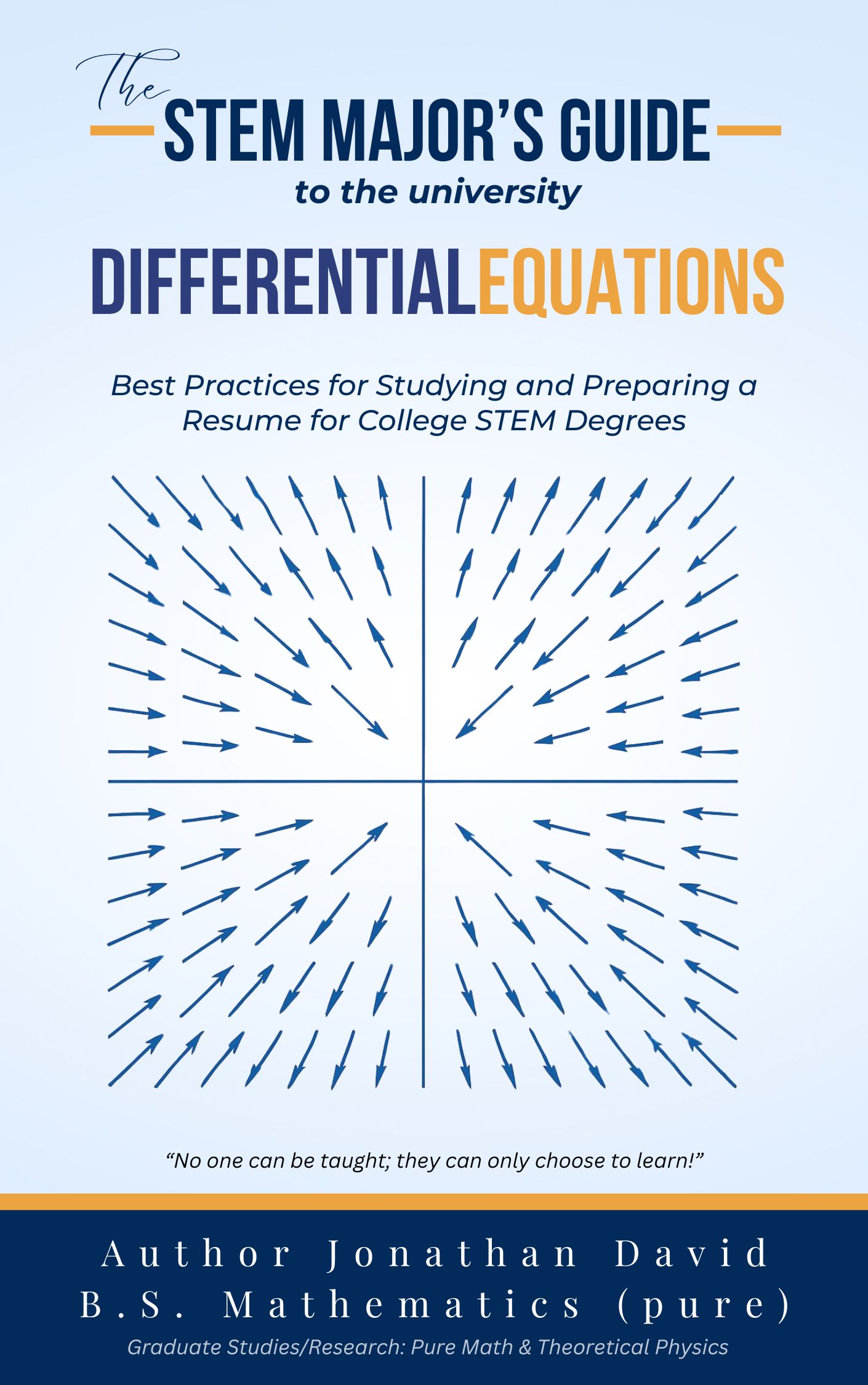
Differential Equations | The STEM Major’s Guide to the University


Understanding The STEM Major’s Guide to the University

In this lesson, Jonathan David explains how the
STEM Major’s Guide to the University is organized inside P.L.E.M. Academy and how the
research position, certificate system, textbook development, and lesson library all work together.

The lesson explains that active problems first appear inside the research position where students can participate by reviewing lessons and leaving comments for publication credit in future books.
After the lessons are edited and refined, they are categorized into the appropriate textbook sections throughout the website.

Students are shown how the accordion system works, how lesson previews appear for non members, and how membership restricted material becomes available after logging in.

Jonathan also explains that the project is being built gradually over time and that the long term goal is to create a massive organized library of advanced STEM examples, textbook walkthroughs, and professional academic demonstrations for college students.

The lesson emphasizes that the goal is not simply to solve homework problems, but rather to teach students how to think and work professionally using real textbook style examples from mathematics, physics, engineering, and related STEM subjects.


“I'm not here to do your homework for you. I'm trying to show you guys how to be professional and how to use your textbook correctly by doing real examples that you guys see in college.”

— Jonathan David

Membership Required

You must be a member to access this content.

View Membership Levels

Already a member? Log in here

Waves and Acoustics | PHYSICS


Understanding The STEM Major’s Guide to the University

In this lesson, Jonathan David explains how the
STEM Major’s Guide to the University is organized inside P.L.E.M. Academy and how the
research position, certificate system, textbook development, and lesson library all work together.

The lesson explains that active problems first appear inside the research position where students can participate by reviewing lessons and leaving comments for publication credit in future books.
After the lessons are edited and refined, they are categorized into the appropriate textbook sections throughout the website.

Students are shown how the accordion system works, how lesson previews appear for non members, and how membership restricted material becomes available after logging in.

Jonathan also explains that the project is being built gradually over time and that the long term goal is to create a massive organized library of advanced STEM examples, textbook walkthroughs, and professional academic demonstrations for college students.

The lesson emphasizes that the goal is not simply to solve homework problems, but rather to teach students how to think and work professionally using real textbook style examples from mathematics, physics, engineering, and related STEM subjects.


“I'm not here to do your homework for you. I'm trying to show you guys how to be professional and how to use your textbook correctly by doing real examples that you guys see in college.”

— Jonathan David

Membership Required

You must be a member to access this content.

View Membership Levels

Already a member? Log in here

Linear Algebra | The STEM Major’s Guide to the University


Understanding The STEM Major’s Guide to the University

In this lesson, Jonathan David explains how the
STEM Major’s Guide to the University is organized inside P.L.E.M. Academy and how the
research position, certificate system, textbook development, and lesson library all work together.

The lesson explains that active problems first appear inside the research position where students can participate by reviewing lessons and leaving comments for publication credit in future books.
After the lessons are edited and refined, they are categorized into the appropriate textbook sections throughout the website.

Students are shown how the accordion system works, how lesson previews appear for non members, and how membership restricted material becomes available after logging in.

Jonathan also explains that the project is being built gradually over time and that the long term goal is to create a massive organized library of advanced STEM examples, textbook walkthroughs, and professional academic demonstrations for college students.

The lesson emphasizes that the goal is not simply to solve homework problems, but rather to teach students how to think and work professionally using real textbook style examples from mathematics, physics, engineering, and related STEM subjects.


“I'm not here to do your homework for you. I'm trying to show you guys how to be professional and how to use your textbook correctly by doing real examples that you guys see in college.”

— Jonathan David

Membership Required

You must be a member to access this content.

View Membership Levels

Already a member? Log in here

Textbook Review for “The STEM Major’s Guide to the University”


Understanding The STEM Major’s Guide to the University

In this lesson, Jonathan David explains how the
STEM Major’s Guide to the University is organized inside P.L.E.M. Academy and how the
research position, certificate system, textbook development, and lesson library all work together.

The lesson explains that active problems first appear inside the research position where students can participate by reviewing lessons and leaving comments for publication credit in future books.
After the lessons are edited and refined, they are categorized into the appropriate textbook sections throughout the website.

Students are shown how the accordion system works, how lesson previews appear for non members, and how membership restricted material becomes available after logging in.

Jonathan also explains that the project is being built gradually over time and that the long term goal is to create a massive organized library of advanced STEM examples, textbook walkthroughs, and professional academic demonstrations for college students.

The lesson emphasizes that the goal is not simply to solve homework problems, but rather to teach students how to think and work professionally using real textbook style examples from mathematics, physics, engineering, and related STEM subjects.


“I'm not here to do your homework for you. I'm trying to show you guys how to be professional and how to use your textbook correctly by doing real examples that you guys see in college.”

— Jonathan David

Membership Required

You must be a member to access this content.

View Membership Levels

Already a member? Log in here